A pair of (Qajar period) silver flower vases, made in Isfahan or Shiraz, late 19th or early 20th century.


A pair of (Qajar period) silver flower vases, made in Isfahan or Shiraz, late 19th or early 20th century.
£1,500.00
Description
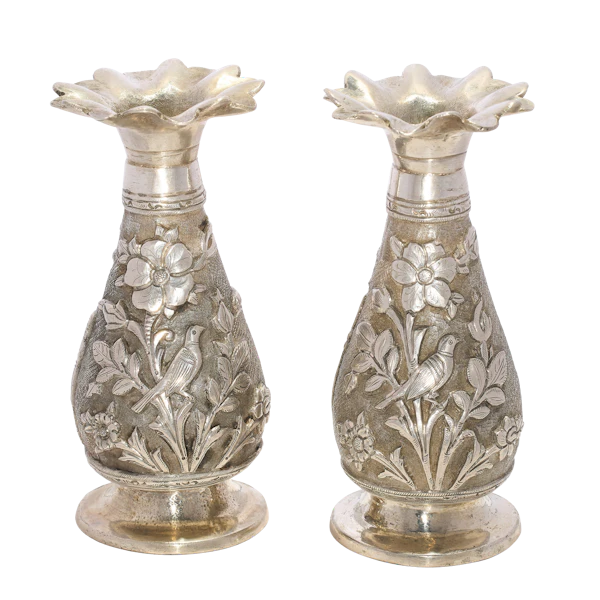
A pair of Persian (Qajar period) silver flower vases, made in Isfahan or Shiraz, dating to the late 19th or early 20th century (c. 1880–1920). The repoussé decoration combines floral ornament with figural scenes characteristic of Qajar metalwork.
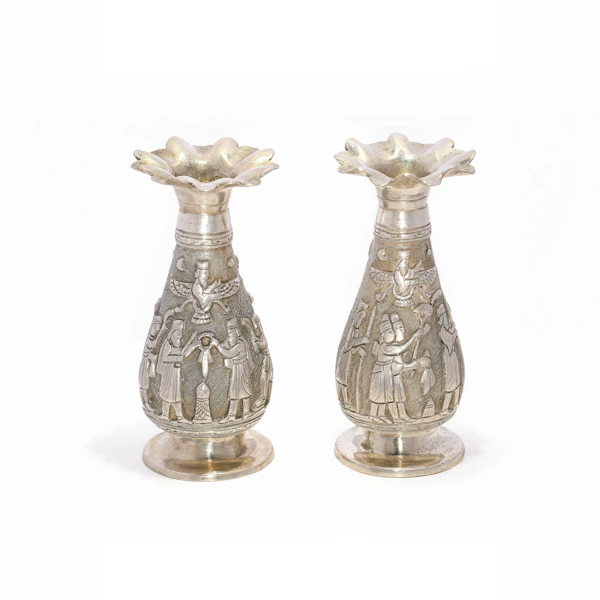
This elegant pair of Persian silver vases embodies the refined decorative traditions of the late Qajar period. Each vase rises from a circular spreading foot to a gently tapering pear-shaped body, surmounted by a broad, undulating flared rim formed as an open blossom. The sculptural silhouette recalls the natural form of a flower in bloom, an enduring symbol of beauty and renewal in Persian art.
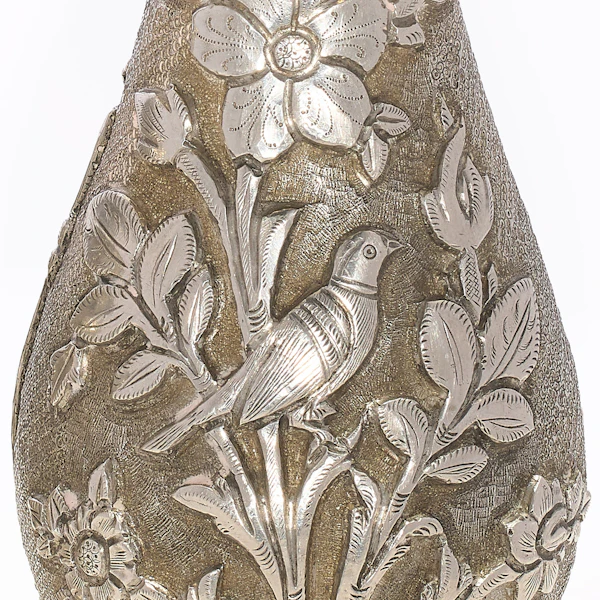
The bodies are richly decorated in high repoussé with flowering plants inhabited by songbirds, executed against a finely stippled ground that enhances the contrast between polished relief and textured surface. Large blossoms, scrolling foliage and delicate branches are arranged in balanced compositions inspired by the luxuriant gardens celebrated throughout Persian literature and miniature painting. Birds perched among the flowers allude to the poetic imagery of the gul-o-bulbul ("rose and nightingale"), symbolising love, harmony and the beauty of nature.
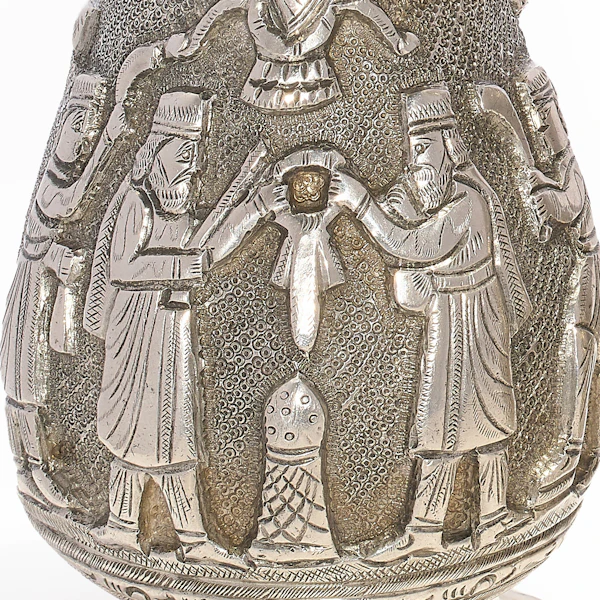
Interspersed among the floral decoration are narrative figural panels depicting bearded courtiers wearing traditional Persian robes and caps gathered around a central ceremonial standard or finial. These scenes are characteristic of Qajar decorative arts, reflecting the courtly life and ceremonial culture of nineteenth-century. The stylised treatment of the figures, with their elongated garments and engraved facial features, closely parallels decoration found on contemporary Persian silver vessels, rosewater sprinklers and ceremonial objects.
The ornament is completed with engraved borders of scrolling arabesques and stylised floral bands framing the neck and foot, demonstrating the remarkable skill of Persian silversmiths in combining repoussé modelling with finely chased detail.
Originally intended as decorative flower vases or ceremonial display vessels, examples of this quality would have adorned affluent households and were often presented as prestigious gifts. Their combination of floral symbolism, courtly imagery and exceptional metalwork exemplifies the revival of Persian silversmithing during the Qajar era, when traditional Safavid decorative vocabulary was reinterpreted for a new generation of patrons.
Measurements:
Width: 6 cm
Height: 14 cm
Weight for 2: 572 grams
| item details | |
|---|---|
| Material and Technique | Silver |
| Origin | Middle Eastern |
| Period | 1980s |
| Condition | Excellent |
| Dimensions | Width: 6 cm Height: 14 cm Weight for 2: 572 grams |
Product REF: PER12345
